
Crops · Soybeans

Soybeans

Soybeans fix their own nitrogen. What holds yields back on Ontario ground is usually phosphate, potassium, or manganese.

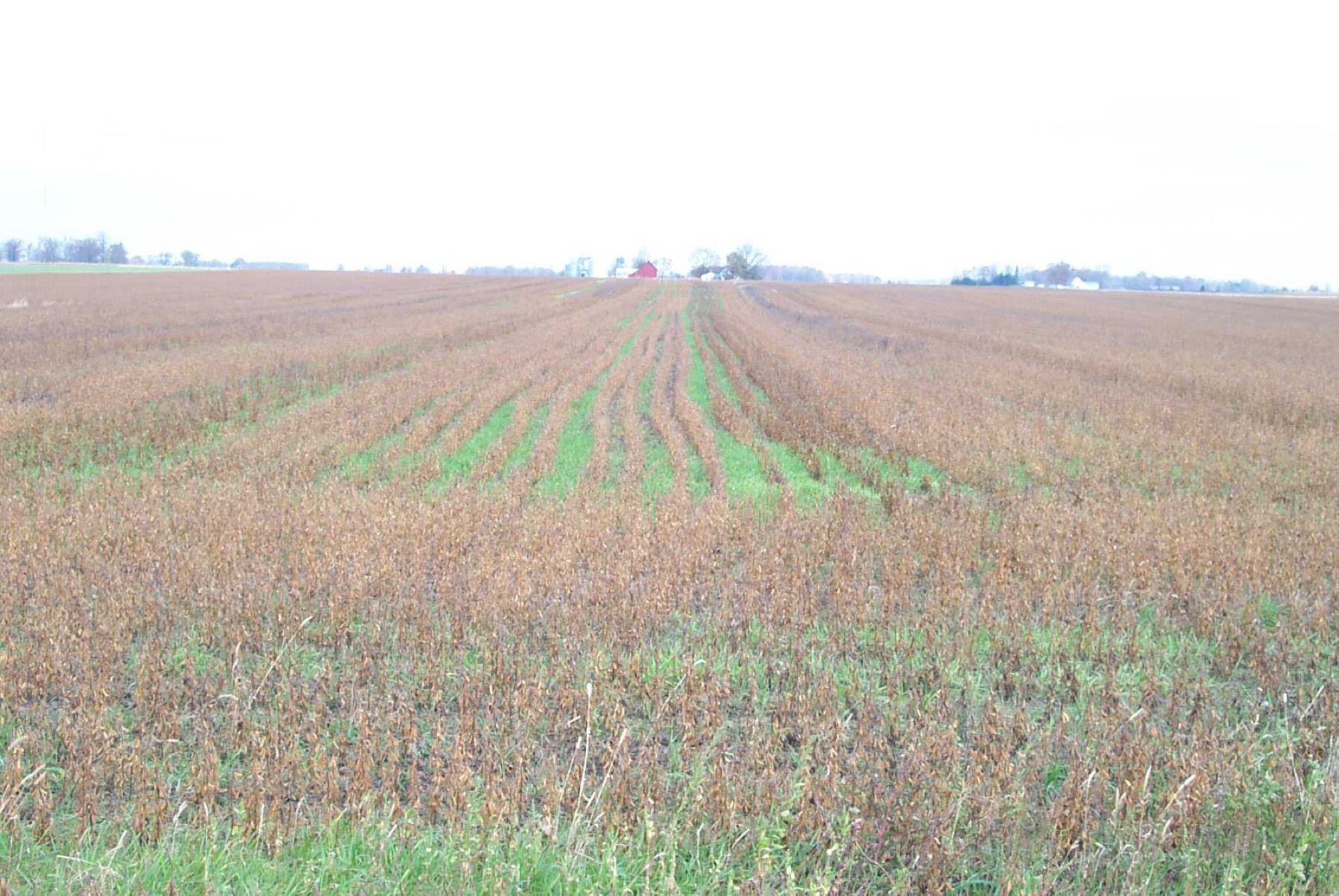
Soybeans field

Rhizobia bacteria in the root nodules supply the nitrogen the plant needs, so adding more nitrogen rarely pays. The real levers are phosphate for roots and pod fill, potassium for standability and finishing, and a handful of micronutrients. Manganese in particular shows up as a yield-limiter on Ontario fields with higher organic matter.

Spotting deficiency in the field

The nutrients most likely to limit soybeans yield, what each one looks like before you sample, and how to confirm.

Phosphate diagnostic
photo coming soon

Phosphate

Roots, nodules, pod fill.

What it looks like
Plants stunted and dark, often with leaf edges curling downward. Pods set low on the stem. Most yield loss happens before the field looks like anything is wrong.
Where to look
Whole plant. Short, tight growth with poor branching is a tell.
When it shows up
From a few leaves up through first flower. Past flowering, you can't fix it this year.
Confirm with
Fall or early-spring soil test. A tissue test at first flower if symptoms are unclear.
Potassium

Water handling, disease resistance, filling pods.

What it looks like
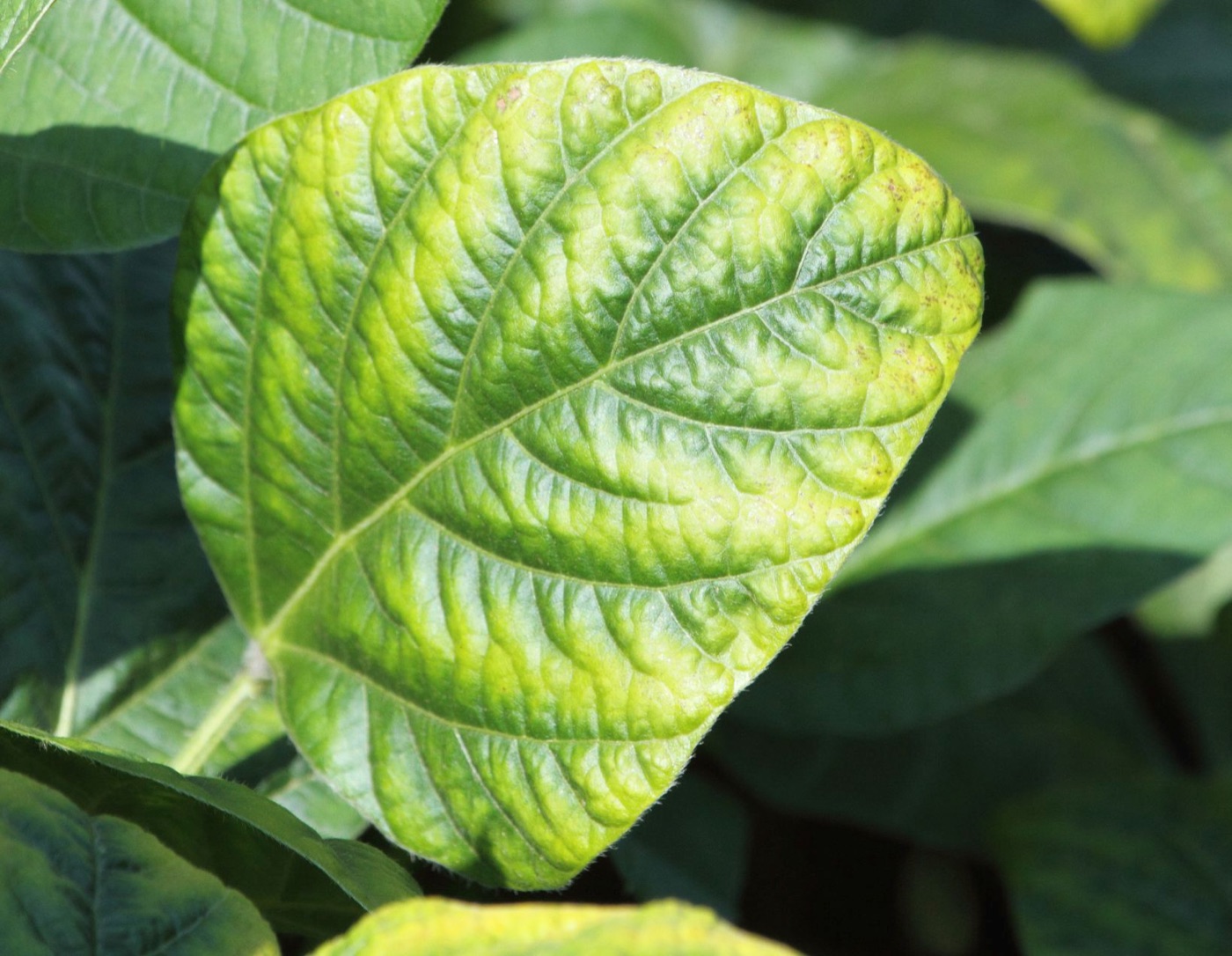
Yellow then brown scorch along the edges of the leaflet, working inward. In bad cases it looks like a burnt halo around the leaf.
Where to look
Older lower leaves first. Like nitrogen, the plant pulls potassium from old leaves to feed new ones.
When it shows up
Through pod fill. Heavy demand late in the season brings out potassium shortages.
Confirm with
Soil test. Tissue test at first flower. Levels below about 1.7% are considered low.
Potassium-deficient soybean showing interveinal chlorosis and marginal browning
K-deficient soybean: interveinal yellowing and scorched leaf margins.
Manganese diagnostic
photo coming soon

Manganese

Photosynthesis and disease resistance.

What it looks like
Bright yellow between the leaf veins while the veins themselves stay dark green. New growth shows it first. Common on higher-pH and higher-organic-matter ground.
Where to look
Upper, newer leaves. Manganese doesn't move around inside the plant.
When it shows up
From early vegetative through first flower. Especially common after high glyphosate rates.
Confirm with
Tissue test from upper leaves — soil tests for manganese aren't reliable. Levels below 20 ppm are low.

Zinc

Growth regulation, enzyme activity.

What it looks like
New growth looks small and yellow between the veins. Internodes (the space between leaves on the stem) get tight, giving the plant a bunched look.
Where to look
Newest growth. Zinc doesn't move inside the plant.
When it shows up
Early vegetative. More common on sandy fields and high-pH ground.
Confirm with
Tissue test from upper leaves. Low soil zinc supports it.
Zinc diagnostic
photo coming soon
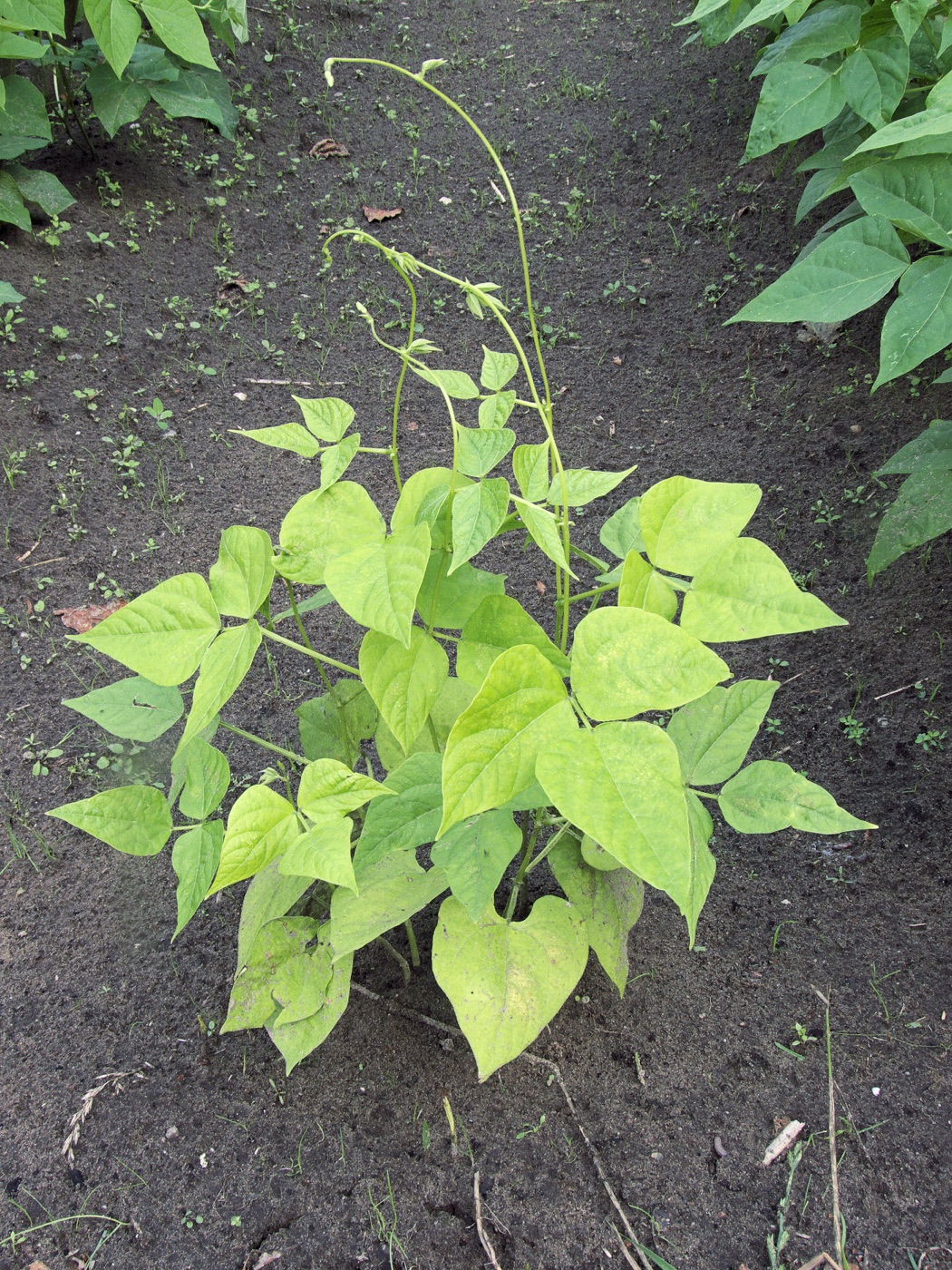
Legume plant showing nitrogen deficiency (runner bean shown — symptoms similar in soybean)
Pale, yellowed legume with nitrogen shortage (runner bean shown — same symptom pattern in soybean).

Nitrogen (nodule failure)

Normally fixed by rhizobia. Nitrogen shortage in soybeans almost always means the nodules aren't working.

What it looks like
Whole plant pale yellow-green. Pull a plant, split a nodule open: healthy nodules are pink or red inside, failed ones are white or green.
Where to look
Dig plants up a few weeks after emergence and check the nodules on the taproot and side roots.
When it shows up
From 3-leaf stage through first flower.
Confirm with
Nodule dissection. If they're pink inside, don't add nitrogen — the real issue is usually soil pH, wet feet, or an inoculation problem.

When it isn’t a nutrient problem

Other things to rule out before you tissue-test or change the program.

White mould (Sclerotinia)

What you see — Fluffy white growth on stems and pods, usually in dense canopies during a cool wet flowering period.

What to do — Wider rows, a lower seeding rate, and easing up on nitrogen all make the canopy less friendly to the fungus. Fungicide at flowering in high-risk years.

Sudden Death Syndrome (SDS)

What you see — Yellow between the veins, then brown, on the upper leaves around pod fill. Leaves stay attached. Roots show grey or blue staining inside.

What to do — Variety selection is the main tool. Fields with a history don't clean themselves up — rotate and plant resistant varieties.

Iron Deficiency Chlorosis (IDC)

What you see — Severe yellowing of upper leaves with veins still green. Worst on high-pH, calcareous ground in cool wet springs.

What to do — Pick varieties rated for IDC tolerance. An iron chelate at planting can help on fields that see it every year.

Soybean Cyst Nematode (SCN)

What you see — Patches of short, yellow plants. Pull roots at first flower and look for small white or yellow females on them.

What to do — Sample soil and get an egg count. Rotate to corn or wheat. Plant resistant varieties, and rotate resistance sources so the nematodes don't adapt.

Dry weather at flowering

What you see — Flowers and small pods dropping during dry stretches in early flowering.

What to do — Not much to do in-season. The decisions that matter — drainage, potassium levels, population — are made before you plant.

The program, at a glance

Rates and timing for soybeans. We’ll match the specific product to what’s available for your season.

Fall (preferred)
Broadcast phosphate at about 0.8 tonnes per acre

Phosphate moves slowly. Fall gives it time to settle into the root zone before planting. Especially important on clay.

Spring pre-plant
Broadcast phosphate at about 0.8 tonnes per acre

If fall wasn't possible, spring still works. Don't skip the phosphate.

Foliar at flowering (as needed)
Manganese if the tissue test calls for it

Manganese problems usually show up at early flower. Address them when you see them, not as a default.

What changes by soil

Same crop, different ground — emphasis, placement, and timing shift.

Sandy

Focus on phosphate and potassium — both move or leach on sandy ground. Watch manganese on higher-pH sand.

Clay

Phosphate is the limiter on clay. Broadcast at a higher rate to push past clay's tie-up — concentration carries the program. Wait for crumbly soil before planting.

Loam

Loam handles beans well with a simple phosphate-focused program. Watch potassium on fields that consistently yield high — you're pulling a lot out at harvest.

Be the next happy customer

"Great customer service. They answer questions quickly and communicate well from sales to field operators. Delivery was fast and applied right away. Great to work with!"

Talk to someone who knows your area

Our advisors live in Southwestern Ontario and farm here too. Reach out by phone or email.

Brent Veens
Brent Veens
Product Advisor
brent@lasalleagri.com
Matheus Finato
Matheus Finato
Product Advisor
matheus@lasalleagri.com

From the Knowledge Hub

Longer reads on the same topics.

Bring us your soil tests — we’ll build the program around them.

Send your most recent reports and rotation plan. We’ll match what’s available for your season to your fields and walk you through rates, timing, and placement.

Talk to our team
Image credits

Photos on this page come from Wikimedia Commons under public domain or Creative Commons licenses. Each is attributed to its author and linked to the source.

  • Hero image — photo by Norm Stephens, source, Public Domain.
  • Potassium — photo by Alan Manson, source, licensed under CC BY-SA 4.0.
  • Nitrogen (nodule failure) — photo by Rasbak, source, licensed under CC BY-SA 3.0.

Images are for reference and may not match your exact field conditions. Always confirm a suspected deficiency with a soil or tissue test before treating. We do not imply endorsement by the photographers.