
Nitrogen
Keeps the plant green, drives leaf area and grain protein.
Corn has a big nutrient appetite and a short window to feed it. Problems usually come from something running short, not something obvious going wrong.

Corn pulls nutrients hard from knee-high through tasselling. It needs nitrogen moving steadily through the plant and phosphate in the root zone from the day it comes up. The rest of the program (sulfur, zinc, potassium) is there to back up the N and P. If yields are off, the cause is usually a nutrient the crop ran short on weeks before you noticed.
The nutrients most likely to limit corn yield, what each one looks like before you sample, and how to confirm.
Keeps the plant green, drives leaf area and grain protein.
Roots, energy, early vigor.
Stalk strength, water handling, finishing the ear.
Even stand, kernel fill, enzyme activity.
Protein, helps the crop use nitrogen efficiently.
Other things to rule out before you tissue-test or change the program.
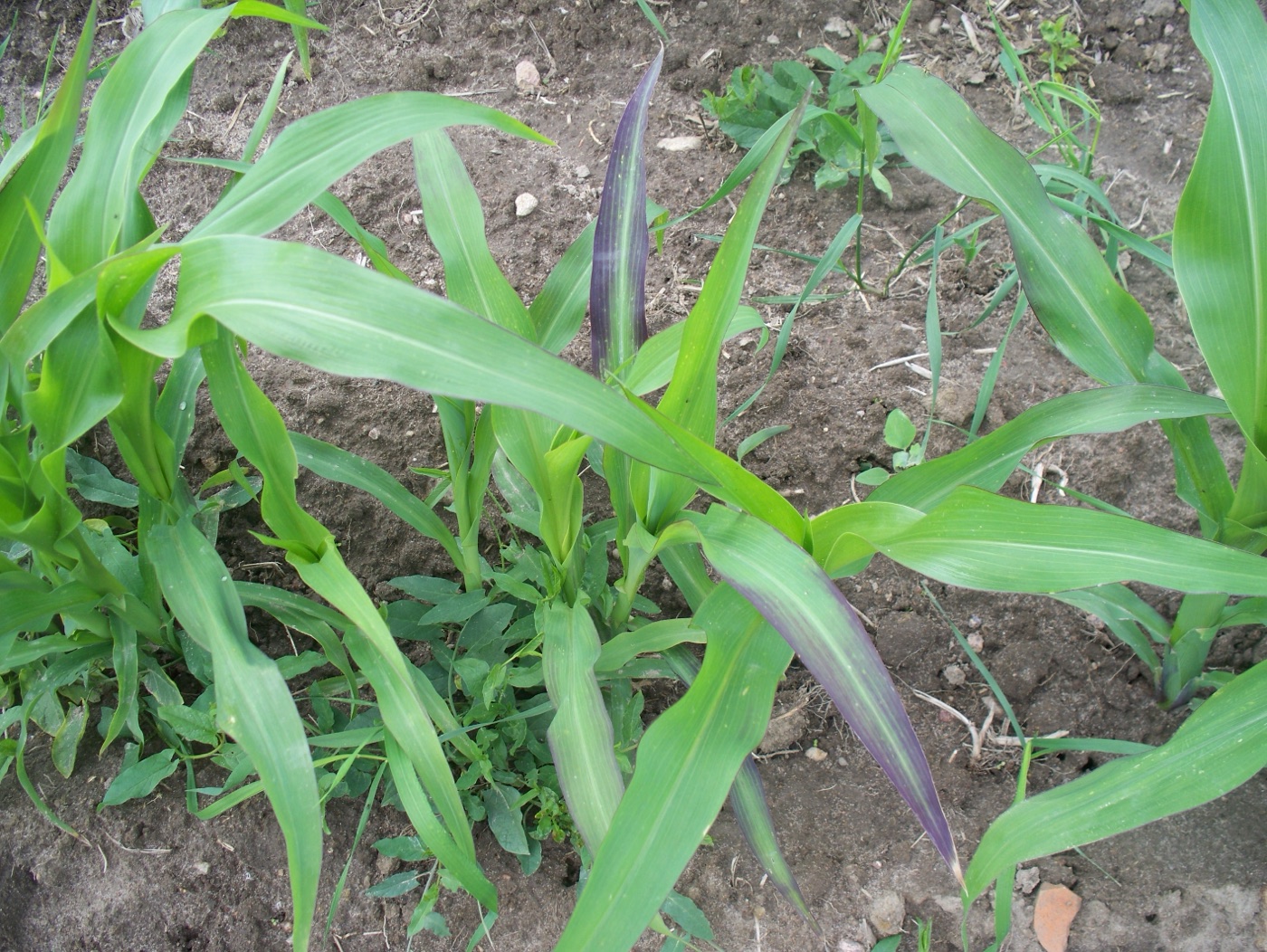
What you see — Short, yellow plants in tire tracks. Roots growing sideways instead of down.
What to do — Dig a pit and check for a hard layer at 4 to 6 inches. Deep tillage or a taprooted cover crop can help. The real fix is staying off wet ground next year.
What you see — Plants at different leaf stages right next to each other. Gaps and doubles in the row.
What to do — Usually a planter or seedbed problem, not a fertility problem. Check seed depth, downforce, and whether the soil was uniform when you planted.
What you see — Seedlings with roots growing along the seed slot instead of down into the soil.
What to do — From planting when the ground was too wet. You can't fix it once it's there. Wait for crumbly soil next time.
What you see — Stunted or twisted plants in patches, often in strips across the field.
What to do — Check last season's residual herbicide label for re-cropping intervals. Dry weather and high pH slow the breakdown. Rotate chemistries if you see this more than once.
What you see — Rolled leaves and dull colour during dry stretches. Plants look stressed but recover after rain.
What to do — Wait for the next rain before running a tissue test. Drought can mimic several deficiencies. If symptoms stick around after moisture returns, then sample.
Rates and timing for corn. We’ll match the specific product to what’s available for your season.
Sets up the season. Work it in shallow so the nutrients sit in the active root zone.
Gets corn out of the ground quickly with a phosphate boost — especially important on cold clay where mineralization is slow.
Useful on sandy ground that leaches nitrogen. Usually not needed on clay or loam.
Same crop, different ground — emphasis, placement, and timing shift.
Sandy soil leaches nitrogen and dries out fast. Lean on products with organic matter, consider splitting your nitrogen, and broadcast a starter pass to get the crop ahead of the first dry spell.
Cold clay is slow to release nitrogen in spring, so the crop leans on what you applied up front. Broadcast phosphate at a higher rate to overcome clay's tie-up — concentration matters when you're spreading wide.
Loam does most of the work. The job is to keep soil capital from drifting downward. A balanced broadcast plus a light starter covers most fields.
Our advisors live in Southwestern Ontario and farm here too. Reach out by phone or email.


Longer reads on the same topics.
Send your most recent reports and rotation plan. We’ll match what’s available for your season to your fields and walk you through rates, timing, and placement.
Talk to our team→Photos on this page come from Wikimedia Commons under public domain or Creative Commons licenses. Each is attributed to its author and linked to the source.
Images are for reference and may not match your exact field conditions. Always confirm a suspected deficiency with a soil or tissue test before treating. We do not imply endorsement by the photographers.