How to Identify Soil Fatigue and Restore Productivity
What Is Soil Fatigue?
Soil fatigue is the gradual decline in soil performance caused by repeated cropping, compaction, nutrient imbalance, and reduced biological activity. Fields that once produced strong, consistent yields start showing signs of stress. It is subtle at first, then becomes expensive.
Farmers often describe soil fatigue as:
- crops that just do not “push” like they used to
- uneven growth even with proper fertility
- fields that no longer respond to fertilizer the way they once did
The good news is that soil fatigue is both identifiable and fixable.
1. Uneven Emergence and Weak Early Growth
One of the earliest signs of soil fatigue is inconsistent emergence across the field. Even when planting depth and seed quality are perfect, the soil itself can limit early vigor.
Common causes:
- compaction layers blocking root penetration
- low organic matter
- poor moisture distribution
- low sulfur or micronutrient availability
What to look for:
- patches of slow emergence
- “flat” early root systems
- seedlings struggling despite good moisture
2. Soil Crusting, Poor Aggregation, or Tight Soil Structure
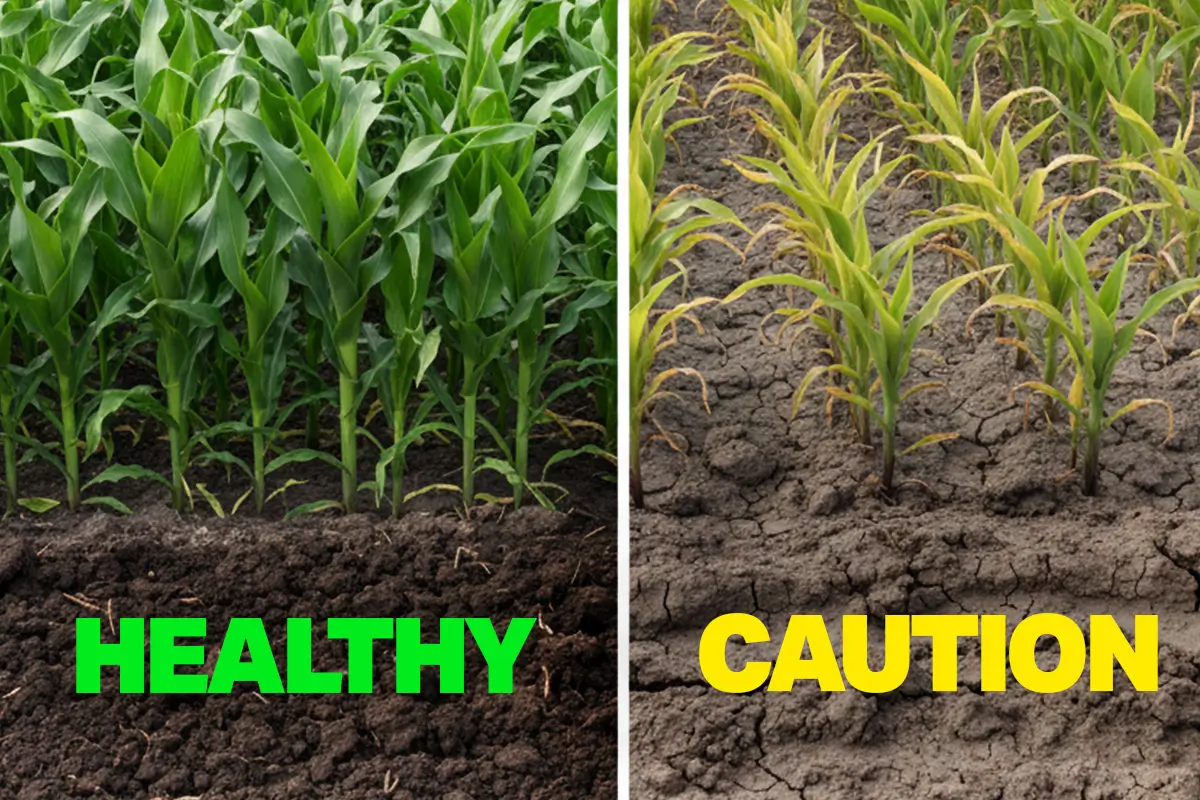
Fatigued soil often loses its crumb structure. This reduces air flow and water infiltration.
Signs include:
- crusting after rain
- water pooling in low spots
- hard soil surface that cracks when dry
- smeared seed trenches during planting
Healthy soil has stable aggregates that let roots explore, water move, and microbes thrive. Soil fatigue erodes that structure over time.
3. Declining Organic Matter and Biological Activity
Organic matter is the engine that drives nutrient cycling, water retention, and soil resiliency. When it drops, soil becomes:
- less forgiving during dry spells
- slower to warm up in spring
- more dependent on synthetic nutrients
Low biological activity means:
- slower breakdown of crop residue
- weaker nutrient mineralization
- reduced phosphorus availability
- lower overall soil energy
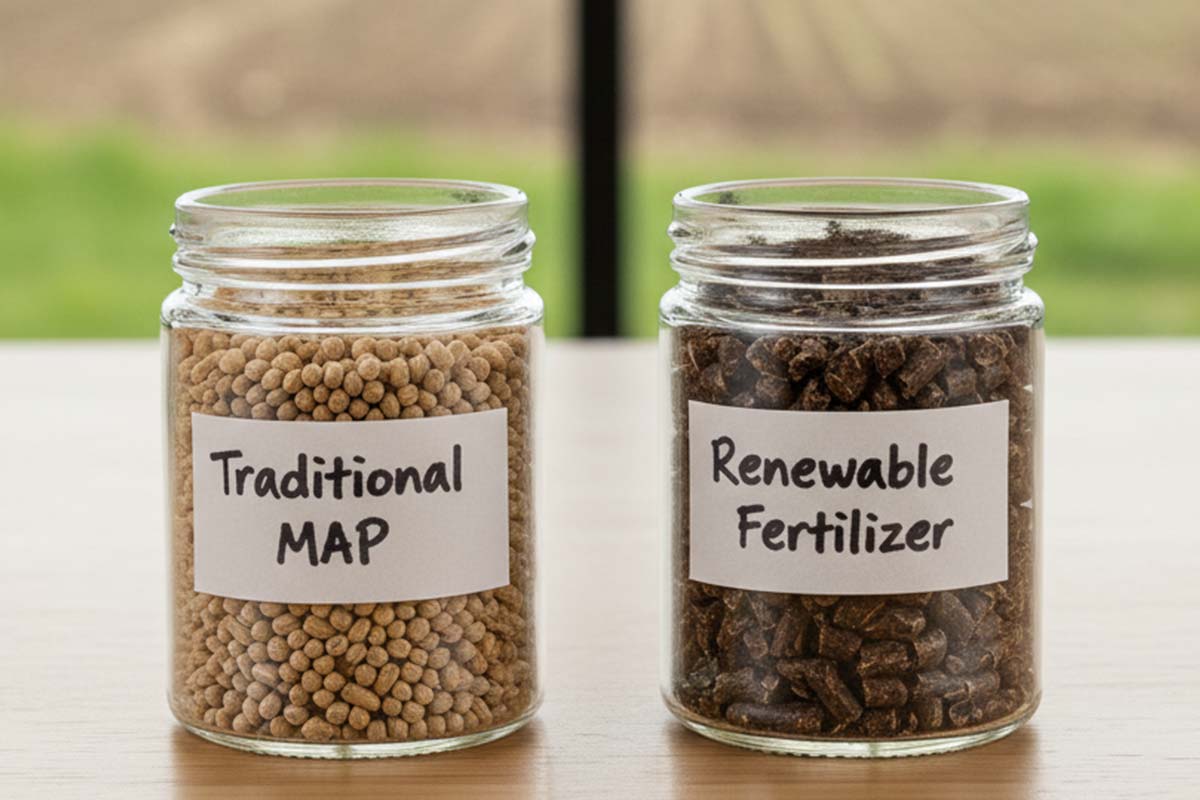
Renewable fertilizers often help rebuild this biological engine by adding carbon and supporting microbial life.
4. Compaction That Creates Hidden Yield Losses
Compaction layers are one of the most common causes of field fatigue and often go unnoticed for years.
Signs of compaction:
- shallow root systems spreading sideways
- differences in growth along equipment traffic lines
- yield drops in areas consistently driven over
- slow infiltration after rainfall
Compaction restricts oxygen, trapping roots in the top few inches of soil where moisture and nutrients fluctuate.
5. Nutrient Imbalance and Micronutrient Deficiencies
Soil fatigue does not always mean “low nutrients.” Sometimes the imbalance is the real problem.
Examples:
- high phosphorus tying up zinc
- insufficient sulfur reducing nitrogen efficiency
- potassium excess restricting magnesium uptake
Soil tests often show:
- nutrients trending to extremes
- repeating patterns of deficiency symptoms
- fields no longer responding to MAP or urea like they used to
Micronutrient and sulfur deficiencies are some of the most overlooked contributors to soil fatigue.
6. Reduced Yield Response Despite Proper Fertility
You apply fertilizer at recommended rates. You follow best practices. Yet yields no longer move.
This often means:
- the soil has lost the biological ability to convert nutrients to plant available forms
- the root environment is restricted
- the soil structure cannot support higher production
- nutrients are tied up in unavailable forms
At this point, simply increasing fertilizer rates won’t fix the issue.
How to Restore Soil Productivity
Bringing tired soil back to life is possible with the right steps.
A. Improve Soil Structure
- controlled traffic or reduced tillage
- cover crops to increase root channels
- organic amendments to improve aggregation
B. Rebuild Organic Matter and Biological Activity
- renewable fertilizers rich in carbon
- diverse rotations
- residue management
- microbial friendly soil environments
C. Address Nutrient Imbalances
- soil test every 2 to 3 years
- watch sulfur and micronutrient levels
- choose fertilizers that supply more than N, P, and K
D. Break Up Compaction
- mechanical ripping when conditions are right
- biological compaction relief through deep rooted crops
- avoiding field traffic when soil is wet
E. Use Inputs That Strengthen Long Term Health
Renewable fertilizers support:
- improved soil structure
- enhanced microbial activity
- balanced nutrient release
- long term resilience
They do not just feed the crop. They help rebuild the soil.
Bottom Line
Soil fatigue is a natural consequence of years of production, but it is not permanent. The key is recognizing the early signs and making soil health a regular part of your fertility planning.
Productive soil is alive, balanced, structured, and resilient. When you rebuild it, yields follow.