How Renewable Fertilizers Compare to MAP
General information only. Not agronomic, legal, or financial advice. Always consult a certified crop advisor for field specific decisions.
Why Farmers Are Asking About Alternatives to MAP
Monoammonium Phosphate (MAP) has been a standard phosphorus source for decades. Farmers know it, trust it, and understand how it performs. But across Canada, more growers are exploring renewable fertilizers as prices fluctuate, soil health becomes a higher priority, and sustainability requirements increase.
The big question is simple: “Do renewable fertilizers actually perform, and how do they compare to MAP and other traditional inputs?”
This article breaks down the differences in practical, farmer focused terms.
1. Nutrient Value: Concentration vs Availability
MAP is known for its predictable nutrient concentration:
- 11 percent nitrogen
- 52 percent phosphorus (as P₂O₅)
Renewable fertilizers vary by product, but many supply a more diverse nutrient profile that includes:
- available phosphorus
- organic nitrogen
- sulfur
- micronutrients like zinc, boron, and manganese
- carbon and organic matter that improve soil structure
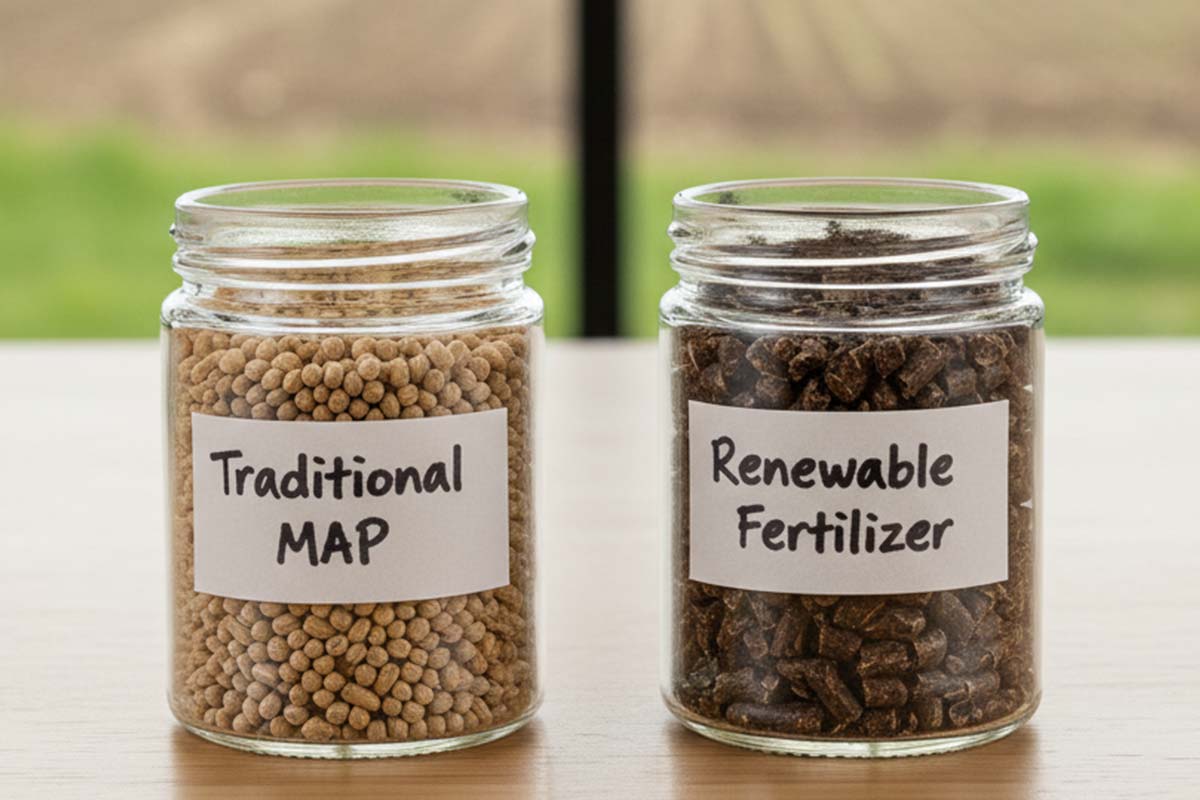
The key difference: MAP provides a strong, concentrated phosphorus shot. Renewable fertilizers provide a slower, more biological release with additional secondary nutrients.
In soils low in sulfur or micronutrients, renewable fertilizers often improve crop response beyond what MAP alone can achieve.
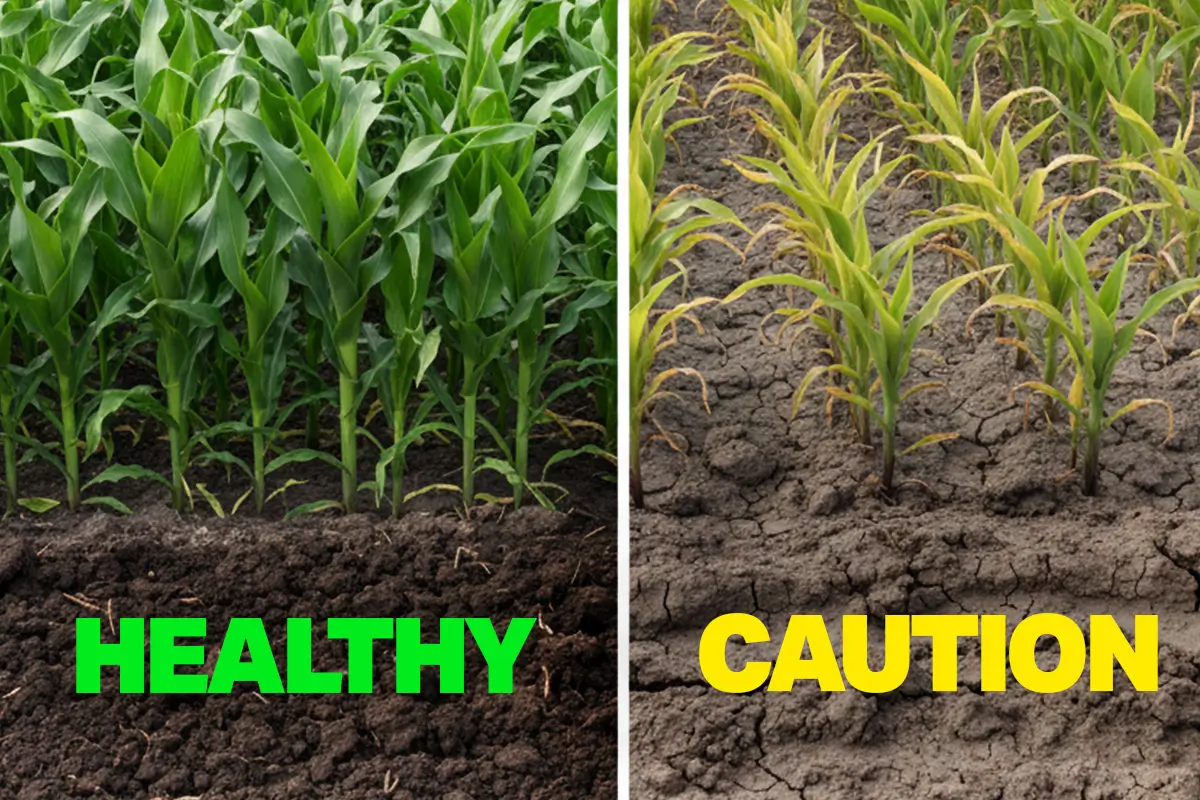
2. Soil Health Impact: One Does Chemistry, One Does Biology
MAP
- Highly soluble
- Can tie up quickly in high pH soils
- Does not improve soil structure
- Long term overuse may contribute to nutrient stratification
Renewable Fertilizers
- Add carbon that feeds soil microbes
- Improve water retention and aggregation
- Release nutrients as soil biology processes them
- Support long term soil resilience
Farmers dealing with sandy soils, low organic matter, or soil fatigue often see better long term benefits from renewable inputs than from MAP alone.
3. Efficiency of Phosphorus Use
A major issue with MAP is that 40 to 80 percent of applied phosphorus can become tied up in the soil within weeks due to chemical reactions with calcium, iron, or aluminum.
Renewable fertilizers change that equation by:
- delivering phosphorus in organic forms that are less prone to fixation
- releasing nutrients gradually, improving plant uptake
- creating microbial activity that mobilizes bound P already in the soil
Translation: You may not need as high a rate to achieve the same plant response, especially in soils already high in phosphorus.
4. Crop Performance: What Farmers Report
While results vary by field, common feedback includes:
- Stronger early root development
- More consistent emergence, especially in tough soils
- Improved sulfur-driven protein formation in cereals
- Better standability and stress resistance
- More even nutrient release across the season
MAP typically excels in early availability but does not influence soil health or sulfur response the way renewable fertilizers do.
5. Environmental Advantages
Renewable fertilizers offer several natural benefits:
- Reduced risk of runoff due to slower nutrient release
- Lower greenhouse gas footprint compared to mining based fertilizers
- Keeps nutrients out of landfills and returns them to productive farmland
- Supports a circular economy model that benefits both the environment and farm profitability
For farms participating in sustainability programs, renewable fertilizers add documentation value that MAP cannot.
6. Cost Comparison: Price vs Value
MAP often has a higher upfront nutrient concentration, which makes cost comparisons seem simple. But farmers increasingly evaluate fertilizers in terms of:
- cost per pound of available nutrient
- nutrient efficiency
- impact on soil health
- reduction in other input costs (sulfur, micronutrients, organic matter)
- long term yield stability
Renewable fertilizers may not match MAP’s concentration but often outperform it in “value per acre,” especially on soils with deficiencies that MAP alone cannot correct.
Bottom Line
MAP will always have a place in crop nutrition. It is predictable, concentrated, and effective in many systems. But renewable fertilizers offer a different kind of value: improved soil health, diverse nutrient profiles, and biological advantages that strengthen yields over time.
For many farms, the best strategy isn’t choosing between MAP and renewable fertilizers. It’s understanding when each one makes the most sense for your soil, your crop, and your long term goals.